
Why customers leave dealerships for service is a question many service managers ask only after the parking lot starts looking emptier. A November 2026 article from Chris Collins Inc., a coaching company for dealership service departments, traces most defections to a short list of trust and convenience problems that a service team can spot and fix.
This guide treats those problems like a diagnostic job: identify the symptom, find the cause, then apply the fix.
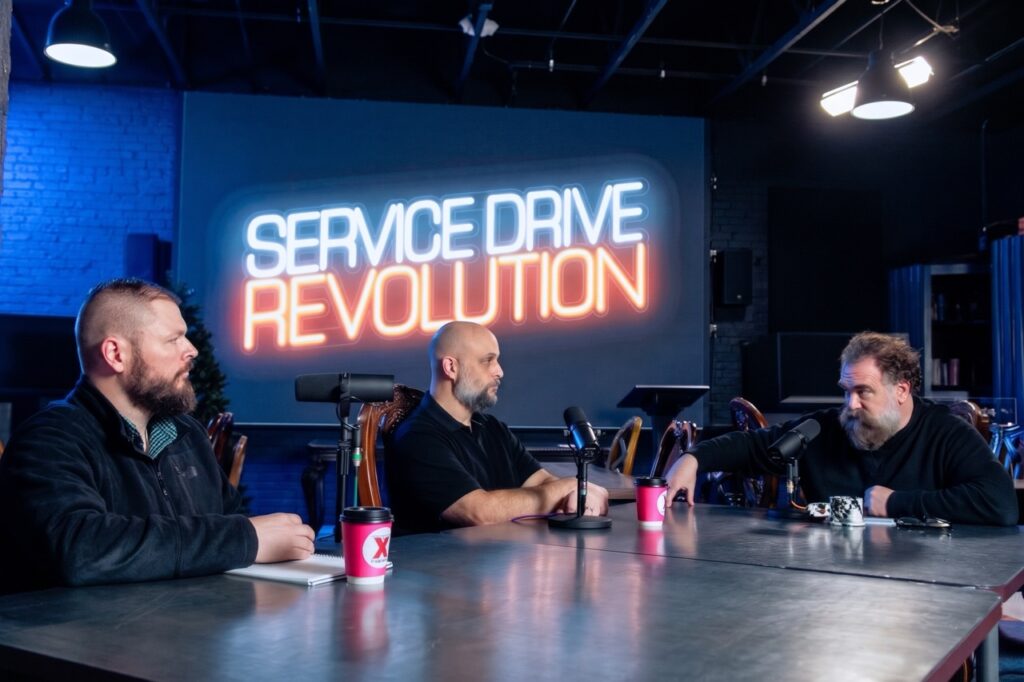
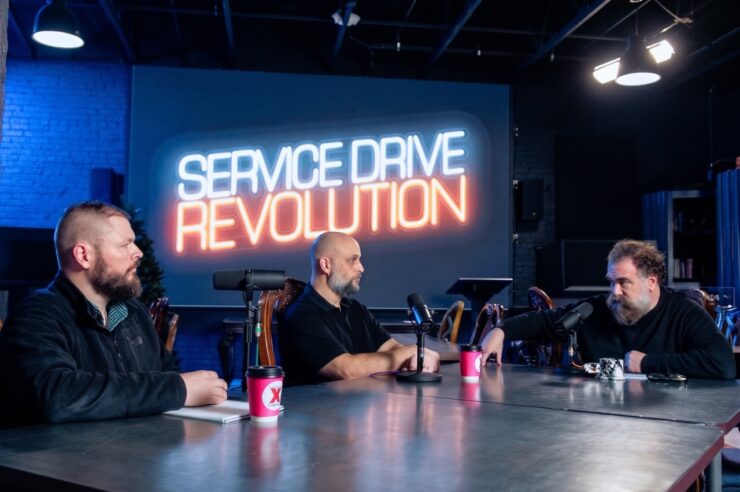
Three speakers discussing dealership service operations during a Service Drive Revolution podcast recording.
The direct answer: Customers leave dealerships for service when the experience feels impersonal, recommendations feel like upsells, scheduling and wait times are a hassle, or they assume dealer prices are higher after the warranty ends. Unanswered calls, silence during repairs, surprise invoices and indifferent staff push them out faster, according to Chris Collins Inc.
Key takeaways
- Defection usually starts with doubt, not a single bad repair.
- Chris Collins Inc. cites research that 60% of callers hang up after one minute on hold.
- Invoice shock, when the bill differs from the estimate, is one of the clearest warning signs.
- Most fixes are process changes: menu pricing, photo inspections, booking tools, agreed updates and a 48-hour follow-up.
- Lost customers can be won back with CRM outreach, free health checks and open safety recall alerts.
Why customers leave dealerships: the four root causes
Chris Collins Inc. groups the main reasons into four causes. Each one gives a driver a reason to try an independent shop.
- Impersonal treatment. Customers who feel like a repair order number, not a person, have no loyalty to keep them around.
- Upsell skepticism. Many drivers see independent shops as neighborhood advisors and assume dealer recommendations exist to meet quotas.
- Operational hassle. Complicated scheduling, long waits, few loaners and slow turnaround make other options look easier.
- The post-warranty cliff. Once free maintenance ends, owners often assume dealer rates are higher and take routine jobs like oil changes and tire rotations elsewhere.
Troubleshooting table: symptom, cause, fix
| Symptom you see | Likely cause | Fix from the source |
|---|---|---|
| Missed calls, abandoned holds | Access barriers at first contact | Real-time online booking with instant confirmations |
| Customers decline recommended work | Distrust of upsells | Photo and video inspections sent to the customer’s phone |
| Complaints about the final bill | Invoice shock and jargon | Plain-language explanations and posted menu pricing |
| “Nobody called me” complaints | Communication gaps during repairs | Agreed update channel and committed check-in times |
| Routine jobs going elsewhere | Post-warranty price assumptions | Upfront menu pricing and loyalty rewards |
| Owners who never return after buying | No early service relationship | Service-lane introduction at vehicle delivery |
How do you know which problem you have?
The quickest way to learn why customers leave dealerships like yours is to ask them right away. Chris Collins Inc. recommends a short two-question text survey sent immediately after a customer picks up their vehicle. Quick answers show managers where the experience broke down while there is still time to fix it.
Phone data is another clue. If many callers abandon holds, the problem starts before anyone reaches the service drive.
Fixing the trust problems
What makes customers believe a recommendation?
Evidence and choice. In a multi-point digital inspection, technicians record photos and videos of worn parts on a tablet or phone and send them to the customer. Chris Collins Inc. adds that recommendations should be split into immediate safety needs, near-term maintenance and long-term monitoring, so customers control non-urgent spending.
How do you prevent invoice shock?
Make the price clear before work starts and explain it after. Post standard menu prices for common maintenance on a service menu or website. At pickup, advisors should turn repair codes into everyday language and explain why each part matters for safety, performance or wear.
Fixing the convenience problems
The source recommends three changes:
- Online scheduling that lets customers choose an advisor and transportation option, with an instant calendar confirmation.
- Mobility options such as loaner fleets, complimentary rideshare vouchers and valet pickup and delivery.
- Early introductions at new-vehicle delivery: a service-department tour, a meeting with the service manager and a first appointment booked about three months out.
Fixing the people problems
Staff indifference makes customers feel ignored. Advisors should ask each customer how they want updates, by text, call or email, then commit to check-in times and keep them. A call within 48 hours of a completed repair confirms the vehicle runs well and answers billing questions.
Coaching helps make these habits stick; read whether live coaching helps service advisors form lasting habits. Staffing gaps also stretch wait times, which our piece on the technician shortage explores. For a local-business view of relationships, see what Speck’s Sunnyside roots teach local businesses.
Winning back customers who already left
Knowing why customers leave dealerships is only half the job; the other half is bringing them back. Chris Collins Inc. recommends using the CRM (customer relationship management) database to find lapsed customers, then reaching out with personal messages, free vehicle health checks or alerts about open safety recalls. Loyalty programs with points toward maintenance, free tire rotations or discounted detailing give them a reason to stay. Read the original How to Reduce Service Customer Defection in 2026 for the full approach and details on the company’s Service Drive Revolution (SDR) Live Academy.
FAQ
What is the most common reason customers leave dealerships for service?
Lost trust is the common thread. Chris Collins Inc. points to impersonal treatment, doubts about upsells, scheduling hassles and the assumption that dealer prices are higher after the warranty ends. Any one of these can push a driver to try an independent shop, and many never return.
How much do long hold times hurt a service department?
They hurt a lot. Chris Collins Inc. cites hold-tolerance research showing that 60% of callers hang up after one minute on hold. Unanswered calls and long holds create a poor first impression, and frustrated callers may book with a competitor instead. Online booking gives them another way in.
What should service advisors do differently to keep customers?
Speak plainly, explain each repair’s purpose, and walk the vehicle with the customer during check-in. Chris Collins Inc. also recommends agreeing on how and when to send updates, then keeping those commitments. A follow-up call within 48 hours shows the dealership cares after the payment.
Can a dealership win back a customer who switched to an independent shop?
Yes. Segment lapsed customers in the CRM, lead with useful reasons to return, such as open safety recalls or a free vehicle health check, and send personal messages across channels. Then make the return visit flawless so the customer sees real change.