
Direct Answer
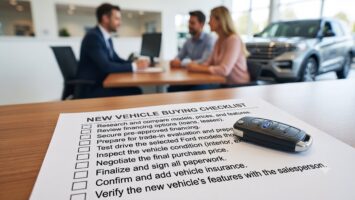
For most Washington buyers who prioritize transparent local taxes, in-person inspections, immediate trade-in tax credits, and nearby service, a local dealership will often deliver better value and fewer administrative headaches than an online-only option like Carvana. If convenience and a fixed no-haggle price are your top priorities and you accept potential shipping fees and limited physical inspection, an online retailer can still be a viable choice.
Why Washington drivers should think differently
Washington’s driving environments—from Snoqualmie Pass in winter to rural roads in the Yakima Valley—place extra demands on vehicles. That affects what you should inspect before buying. Beyond mechanical concerns, Washington’s sales tax structure and vehicle registration rules influence out-the-door costs and timelines. These factors make the choice between a local dealer and a national e-commerce seller more than a matter of sticker price.
Head-to-head comparisons: What matters most
Upfront price versus added transport costs
National online retailers promote single, no-haggle prices, which feel simple. But many platforms keep vehicles in regional hubs; getting a specific car to a Washington address frequently adds a non-refundable transport fee—typically ranging from several hundred to over a thousand dollars. If you return the vehicle under a platform’s return policy, that shipping charge is usually not refunded. Local dealerships list inventory for the regional market and don’t add cross-country delivery charges to your invoice. A local dealer also calculates your exact sales tax at sale time using the Washington Department of Revenue tax lookup, avoiding surprises at registration.
Inspection: digital checklists vs. hands-on evaluation
Online sellers rely on standardized multi-point inspections and photos. Those catch many items, but subtle issues—incipient undercarriage rust from salted roads, minor leaks, or faint interior odors—can go unnoticed in images. Buying at a local dealership allows you to physically inspect the car, open the hood, and test it on local terrain before signing paperwork.
Trade-ins and immediate tax benefits
Online trade-in offers are algorithm-driven and contingent on your self-reported condition; the final offer often shifts after an inspection. Local dealers evaluate trades in person and can recognize details like newly installed tires or recent maintenance. Crucially, a Washington dealer can apply your trade-in tax credit on the spot, lowering taxable amount and saving you state sales tax at the time of sale.
Financing flexibility and rate shopping
Online platforms provide built-in financing, which is fast and streamlined. Their automated underwriting may limit your access to the broadest lending market. Local dealerships maintain finance teams that submit your application to multiple sources—manufacturer captives, national banks, and regional credit unions—potentially producing more competitive APRs or flexible terms. For help, a dealer finance manager can negotiate on your behalf; see an example of dealership finance resources at Speck Dealerships finance.
After-sale service and warranty support
If a warning light appears weeks after purchase, national platforms typically route you through centralized customer service processes and approved third-party shops. Buying locally gives you a specific service manager and a nearby shop you can visit in person. Local dealers often provide factory-certified technicians and ongoing maintenance options. If you prefer factory-backed protections, look for certified pre-owned inventories like the ones listed at Speck Dealerships CPO.
Washington law and consumer protections
The Washington State Attorney General Lemon Law focuses on new-vehicle defects while under manufacturer warranty. Used cars sold “as-is” are far less protected, so sight-unseen purchases carry more risk. A local dealer gives you options to inspect, obtain vehicle history, or choose certified pre-owned protection when available.
Common buyer pitfalls in Washington
- Confusing a short “7-day return” window with a full mechanical inspection—returns are not a substitute for a pre-purchase check.
- Overlooking non-refundable transport fees charged by online platforms when the vehicle is returned.
- Failing to confirm how an out-of-state seller handles Washington Department of Licensing paperwork; delays in out-of-state title processing can leave you with expired temporary tags.
- Assuming online photos fully represent a vehicle’s condition—some wear is subtle and best found in person.
How to choose: a short decision checklist
- If you need immediate local service, face-to-face negotiation, and precise tax handling: favor a Washington dealership.
- If you value one-price convenience and are willing to accept potential transport fees and a remote inspection: an online retailer can work.
- Always verify how trade-in credits affect sales tax and whether delivery or return shipping is refundable before you click “buy.”
- When buying used sight-unseen, plan for an independent mechanic to inspect the vehicle within the return window.
Frequently Asked Questions
Q: If I return an online purchase, what happens to Washington sales tax?
A: When an online sale is canceled under the platform’s return policy, the purchase is reversed and the state sales tax you paid is typically refunded. Keep in mind, however, that transport or delivery charges paid to bring the car to Washington are usually non-refundable.
Q: Are any local dealers offering no-haggle prices like online sellers?
A: Yes. Many Washington dealerships now publish transparent, market-based prices that remove hard bargaining. That approach pairs predictable pricing with the benefits of a physical location—inspection, immediate trade-in handling, and local paperwork assistance.
Q: Will an online dealer handle my Washington DOL paperwork?
A: Some out-of-state online sellers will submit title and registration documents for you, but processing can be slower than a dealer that files routinely with the Washington Department of Licensing. Confirm timelines and whether temporary tags will cover you during processing to avoid registration interruptions.
Q: Does buying certified pre-owned protect me more than an online return policy?
A: Certified pre-owned programs usually include factory-backed inspections and warranty coverage that protect you beyond a short return period. If long-term mechanical protection is important, a CPO vehicle from a local dealer can be a stronger safeguard than relying solely on an online platform’s return window.
Ready to search local inventory or compare offers? Visit Speck Dealerships or browse their online listings. For a side-by-side visual comparison of online delivery fees and shipping policies, watch this Carvana vs. Dealership comparison video.
Related reading on techypopat.com: The Car Buying Details Washington Shoppers Often Overlook; Revealed: New vs. Used Cars for Washington State Drivers.