Classic novel remakes are dominating the 2026 entertainment schedule because they offer high-stakes emotional resonance and pre-established brand recognition in an uncertain media market. Studios are pivoting toward timeless narratives to capture audiences looking for “earnestness” in an era of digital irony and short-form content. This trend is a cultural response to digital fatigue, where viewers seek the depth, slower pacing, and universal themes found in historical and mythological literature.
The revival of these stories is more than a nostalgic exercise; it is a strategic alignment with modern visual subcultures. Aesthetics like “mythology-core” and “folklore-core” have migrated from social media mood boards to major film sets, influencing the look and feel of high-budget productions. By adapting public domain works, Hollywood can take greater creative risks with visual style while relying on plots that have already stood the test of centuries.
As streaming platforms and cinemas compete for a dwindling share of attention, the reliability of a “known” story becomes a powerful asset. From the moors of Yorkshire to the islands of Ancient Greece, the current slate of films suggests that the most effective way to address modern anxieties is through the lens of the past. This article explores the specific releases, aesthetic drivers, and societal shifts fueling the surge in classic novel remakes.
Why Is Hollywood Prioritizing Classic Literature in 2026?
The surge in classic novel remakes is primarily driven by the financial safety of the public domain and the growing influence of online reading communities. Unlike contemporary bestsellers, which often come with expensive licensing fees and protective fanbases, classic works allow filmmakers to experiment with “decidedly loose” interpretations. This freedom was recently demonstrated by director Emerald Fennell, whose provocative take on Wuthering Heights became a box office sensation in early 2026.
Data from the Pima County Public Library (https://pima.bibliocommons.com) shows a significant overlap between popular 2026 film releases and a spike in checkouts for the original texts. This suggests a symbiotic relationship where “BookTok” trends and film announcements feed into one another. When a studio announces a star-studded cast for an old story, it often triggers a renewed interest in the physical book among younger demographics.
Furthermore, classics provide a “total world” experience that contrasts sharply with the fragmented nature of modern life. Characters in 19th-century novels do not navigate social media or text message notifications, offering a “refreshing sense of antiquity” for viewers overwhelmed by technology. Many readers find that engaging with these deep narratives mirrors how literature helped me discover my true voice, providing a sense of identity that digital scrolling cannot replicate.
Major Releases Redefining the Classics This Year
Several high-profile projects have set the standard for the 2026 literary boom, featuring “A-list” talent and visionary directors. These adaptations are characterized by their “sensorial” approach, prioritizing atmosphere and emotional intensity over strict adherence to every plot point of the original text.
- Wuthering Heights: Directed by Emerald Fennell and starring Margot Robbie and Jacob Elordi, this version leans into the “toxic” and obsessive nature of the original characters for a modern audience.
- The Odyssey: Directed by Christopher Nolan, this epic focuses on the “Return” of Odysseus (played by Ralph Fiennes) and draws heavy inspiration from the gritty, human-centric translation by Emily Wilson.
- Pride and Prejudice: Netflix has launched a six-part limited series written by Dolly Alderton, starring Emma Corrin as Elizabeth Bennet and Jack Lowden as Mr. Darcy.
These productions represent a shift away from the “stiff” period dramas of previous decades. Instead, they utilize contemporary music, saturated color palettes, and handheld camera work to make the 18th and 19th centuries feel immediate and raw. The goal is to make the audience forget they are watching a “classic” and instead feel the visceral stakes of the characters’ lives.
The Influence of Mythology-core and Folklore Aesthetics
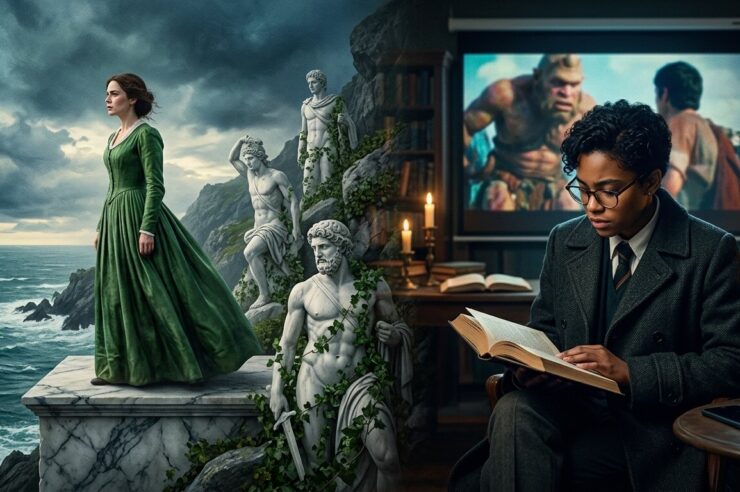
The visual language of 2026 cinema is deeply indebted to “mythology-core,” a digital aesthetic that romanticizes ancient ruins, ethereal lighting, and classical symbolism. This trend began on platforms like Pinterest and TikTok, where users curated images of marble statues, flowing linens, and woodland landscapes. Hollywood has noticed that these visuals perform exceptionally well with Gen Z and Millennial audiences, who value “vibes” as much as narrative.
Folklore aesthetics similarly emphasize a connection to the land and the supernatural, making them the perfect fit for the moody environments of Wuthering Heights or The Odyssey. These styles prioritize “Texture Check” design—cinematography that feels tactile, waxy, or hyper-realistic, as noted in recent design trend reports from Canva (https://www.canva.com). This aesthetic focus turns the film into a visual experience that mirrors the “dark academia” and “cottagecore” lifestyle trends of the early 2020s.
- Mythology-core uses dramatic spotlighting and stage-like backgrounds to elevate historical stories into timeless legends.
- Folklore-core emphasizes regional crafts, handloom patterns, and “imperfect” organic textures that feel human and grounded.
- The combination of these aesthetics helps classic novel remakes stand out in a crowded digital landscape by offering a distinct, high-art “look.”
What the Revival Says About Modern Audiences
The obsession with classic novel remakes reveals a deep cultural longing for “earnestness” in an increasingly isolated world. In a social environment defined by “situationships” and “therapy speak,” the unbridled passion and clear moral stakes of Jane Austen or Emily Brontë feel revolutionary. Audiences are gravitating toward stories where emotions are large, consequences are permanent, and “the all-consuming romance” is the central focus.
This trend also speaks to a growing rejection of “perfection” in digital media. 2026 has been dubbed the year of “Imperfect by Design,” where creators and audiences alike are moving away from the polished, algorithm-friendly look of the 2010s. Classic stories, with their messy human errors and tragic flaws, fit perfectly into this new desire for “raw and honest” storytelling.
Moreover, the popularity of these films indicates a shift in how we process history. Rather than viewing the past as a distant, “solved” era, 2026 audiences use classic novel remakes to explore contemporary themes of social pressure, isolation, and identity. Even as we analyze Silicon Valley and Iran: How Big Tech Shapes a Revolution, it is clear that modern digital structures are causing a swing back toward the fundamental human archetypes found in ancient myths.
The Strategy Behind the Selection Process
Studios are not choosing these titles at random; they are looking for “Knowledge Graph” entities that have high name recognition but low “fandom pressure.” Titles like Frankenstein or Sense & Sensibility are recognizable to almost everyone, but they do not have the same level of protective, “toxic” fandom as a franchise like Harry Potter. This allows directors like Greta Gerwig or Christopher Nolan to put their unique stamp on the material without fear of immediate backlash from purists.
The selection of The Magician’s Nephew for a 2026 Netflix release, for example, allows the platform to build a “Narnia” universe from the ground up while relying on the prestige of C.S. Lewis. This “prestige-plus-familiarity” model is the gold standard for 2026 production. It provides a built-in marketing hook while leaving enough room for “cinematic storytelling” that feels fresh to people who have never read the source material. You can read more about this in our analysis of /creative-risk-taking-in-streaming.
By focusing on public domain titles, Hollywood secures higher profit margins. The hero’s journey and the “enemies-to-lovers” trope remain the most sought-after plot structures for global appeal. Additionally, the inclusion of diverse casting in these traditional stories helps broaden the audience and update the narrative for a 21st-century demographic.
The Future of the Literary Blockbuster
The current wave of classic novel remakes suggests that the “book-to-screen” pipeline is the most stable part of the entertainment industry. While original screenplays face high hurdles for funding, a project based on a “classic” comes with a pre-validated structure and a legacy of success. This has led to the rise of the “literary blockbuster,” where a period drama receives the same marketing budget and IMAX release as a superhero movie.
As virtual production and high-fidelity CGI become more accessible, filmmakers can recreate the Ancient World or 19th-century London with unprecedented detail. This allows for a fusion of “high-concept” visuals and “low-tech” human stories. The result is a cinematic landscape that feels both futuristic in its execution and ancient in its heart.
Ultimately, the trend of 2026 is one of “re-enchantment.” By returning to the foundational stories of literature, Hollywood is attempting to find a common language in a fractured age. Whether through the lens of mythology-core or the sharp wit of a Jane Austen screenplay, these remakes prove that some stories never actually end—they just wait for the right moment to be retold.
Reclaiming the Narrative
The explosion of classic novel remakes in 2026 is a testament to the enduring power of the written word. In a world of fleeting trends and temporary content, these adaptations offer a sense of permanence and intellectual weight. They remind us that human experiences—love, loss, vengeance, and the search for home—remain unchanged, regardless of the technology we use to document them.
By blending modern aesthetics with traditional plots, Hollywood has found a way to make the “old” feel essential again. As we move further into the decade, the success of these films will likely encourage even more “deep dives” into the literary canon. The classics are not just being remade; they are being revitalized for a generation that is ready to slow down and listen.
Frequently Asked Questions
Why are there so many Jane Austen remakes in 2026?
Jane Austen’s works are highly popular because they focus on universal social anxieties, such as status, wealth, and romantic restraint. Her stories provide the perfect foundation for “enemies-to-lovers” narratives, which are currently trending heavily on platforms like BookTok and in modern romantic comedies.
What is mythology-core, and how does it affect movies?
Mythology-core is a visual aesthetic that focuses on Ancient Greek and Roman themes, utilizing marble textures, golden hour lighting, and “ethereal” costumes. In 2026, films like The Odyssey use this aesthetic to create a high-fashion, dreamlike atmosphere that appeals to younger viewers who follow design trends online.
Are these 2026 remakes faithful to the original books?
Many 2026 adaptations are described as “decidedly loose,” meaning they prioritize the mood and themes over a word-for-word translation. Directors are increasingly using classic novels as a “canvas” to explore modern social issues, diverse casting, and experimental visual styles while keeping the core plot intact.